No one, and I mean absolute no one, will remember where it appeared, when it happened, and how it’s present.
In a train station in Vienna, some might say. A playground in Ohio, according to others, or even a temple in Kyoto, if you believe the old woman who sells barley tea near the alley and claims that she saw her dead grandmother. The stories never seem to agree on the details, as they never have.
What everyone agrees on, is that it has never been wrong.
Never once. Never in three hundred years, or five, or however long it has been. Historians have stopped arguing about it centuries ago. Scientists stopped trying to explain it even earlier. The paper never runs out, and the machine never jams. There’s no one to supervise it, no one to clean it, and no one has ever seen a mechanic to repair it, yet it continues to function as perfectly as it did on the day it appeared.
People stopped questioning it a long, long time ago. Now, it’s just there, like rain, like air, like the soil you step on.
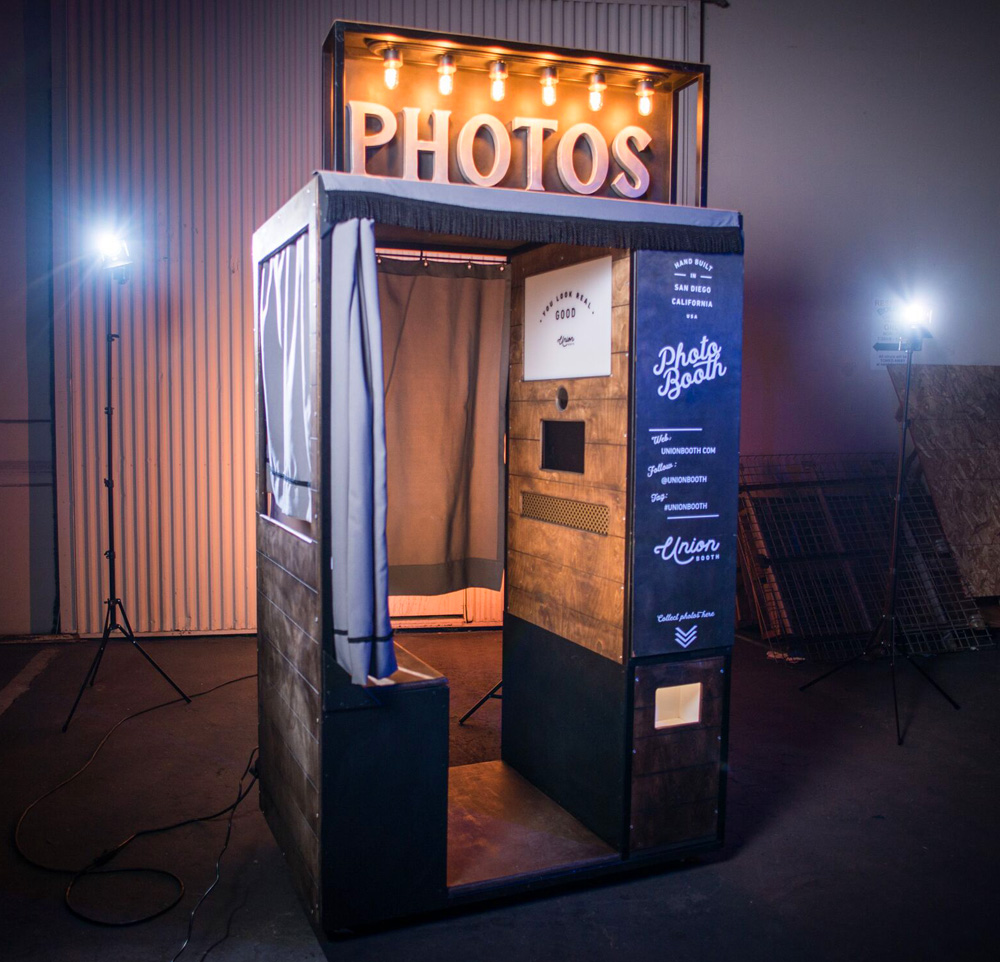
When you sit down, you take a picture. The booth prints your soulmate.
This is the rule. This has always been the rule, and it has never, ever been wrong.
Chapter 1: The booth
Eli files death certificates for a living.
His office was in the basement of the county’s department building, meaning that he went weeks without seeing the sun. He never minded this. The fluorescent lights were predictable. The stacks of paper were predictable. , The names on the certificates were people he had never met and would never meet, which made them safe. And predictable.
Eli has worked there for almost 4 years. His coworkers knew nothing about him except that he was quiet, he never attended the holiday party, and he always refilled the coffee machine without anyone asking him. People just assumed that he was depressed, but he knew he was not. Depression required feeling something, something bad, terrible. Eli felt nothing most days. Absolutely nothing at all. Thank you very much.
Eli lives in an apartment. Beige walls, beige couch. A single plant on the windowsill that had somehow survived without attention nor affection. No photos, no art, no evidence that a human being has lived there except for the stack of takeout containers by the door and the bed that he never bothered to make.
His mother called him every Sunday. He let it ring, she left voicemails that he deleted without listening to. Eli loved his mom, he thought. Like gravity, something you never think about until it failed. And gravity never failed.
The only person who might have called him a friend was Maya. They met three years ago at a coffee shop where she spilled coffee on his laptop. He didn’t react, which she found fascinating. She had made it her project to figure out what was underneath the nothing. And so far, she had discovered very little, and Eli meant very little, but she continued trying.
“You’re not against love,” she told him once, sitting across from him at a diner at 2AM because she could not sleep and had decided he should not either. “”You’re just not in the room when it happens.”
“Aw, that’s poetic,” Eli said. “”And wrong.”
“Then what is it? What are you afraid of?”
He paused, he genuinely thought about it, because Maya was the only person who asked him questions that required genuine thoughts.
“I don’t need a machine to tell me who to care about,” he finally said.
“Dude, it’s not a machine.”
“Then what is it?”
Maya leaned back. She always had a way of smiling that made him feel like he had already lost an argument he never knew he was having. “”It’s the law of nature, you know? Like breathing.”
“Breathing doesn’t require a three hour wait in the rain.”
“You’ve never waited.”
“I’ve never had to.”
She stared at him for a very long time. Then she opened her mouth, “”That’s the saddest thing you’ve ever said, and you’ve said some sad thing.”
***
The alley was full by the time they arrived.
At 3 AM, Eli looked up and saw a shuttered cinema looming above them. The entrance was chained, with stripped letters and padlocks. The only light came from a solitary streetlamp and the booth’s faint, emanating glow. The booth sported a brass fitting, with a velvet curtain the color of wine, with a coin slot that accepted currency no one had printed. There’s no name, no mark, and no manual. Just a small placard on the curtain reads: ONE PHOTO, ONE TRUTH, NO REFUNDS.
The line was long from the booth to the street. Eli counted about forty-seven people. He counted them because counting was easier than feeling about them.
They were of all ages, all races, dressed in anything from suits to pajamas. A woman in her seventies lined up before them, leaning on a cane, and a teenage boy stood behind her, hyperventilating into his phone. His thumb moved so fast it blurred. There was also a man in his forties standing in the line. ; He was staring at his feet with empty hands.
Eli knew that man. He had seen him before; everyone had. He had been coming to the booth for years, decades maybe. No one knew his name, but everyone knew his story. .
He used the booth once years ago. The photo had the face of a woman printed on it. He lost the photo on his way home. Maybe he dropped it, maybe someone stole it, or maybe he just misplaced it in the chaos of his own life. He came back to get another copy, but the booth does not print copies。
The man waited. He had taken the test over and over again, but the booth never printed the same photo twice, each time, a different face appeared, strangers, all of them, he kept the photos anyway, a shoebox full of faces that meant nothing, he posted them everyplace he knew, every Instagram story, every police station, he even hired a private investigator, but none of them were her, the first one, the one he lost, she was gone forever, and still he came back, still he waited, still he hoped that one day the booth would give her back to him.
He never found her.
He kept coming back. Every three months, he stood in line and took the test again; the booth printed the same face every time. He kept the new photos in a shoebox under his bed.
Eli kept looking at the man. He felt something then. , Not pity, not sympathy, but something colder, something that might have been a relief, if Eli was the kind of person who admitted to relief.
“That will not be me,” he thought, “because “I will not care enough for it to hurt.”
***
The line slowly moved
Maya opened her mouth and said something. Her boyfriend, Leo, argued back, which Eli couldn't understand. Leo was a graduate student in philosophy who was working on a paper about free will, which he talked about all the time, especially while doing his dishes. Eli had no idea what Maya saw in him, but they had been together for three years and appeared to be happy, which was more than Eli could say for the majority of people he knew.
People entered the booth. The curtain closed. A flash of light, a lot brighter than it should be given the size of the machine. One woman stumbled and got caught by the teenager behind her. One man fell to his knees in the middle of the alley and pressed his photo to his forehead like a man receiving a blessing.
The woman in her seventies reached the front of the line. She walked into the booth without hesitation.; The curtain closed.
When she came out, she was not crying; she was not laughing; she was just calm. She folded the photo carefully and tucked it into her coat pocket, next to her heart.
Eli found himself watching her. Something about her stillness unsettled him more than the crying.
"She's been here four times," the teenager behind Eli said. Eli turned. The boy was maybe sixteen, skinny, wearing a hoodie that said BOOTH OR BUST. "That's her fourth match. The first one died. The second one divorced her. Third one—" He stopped. "I shouldn't gossip."
"Then don't," Eli said.
The boy looked hurt. "I'm just saying. She keeps coming back, she doesn't give up, ain’t that beautiful?"
Eli looked at the woman. She was already walking away, her cane tapping against the pavement, her shoulders straight.
"I don't know," Eli said. "Maybe it's something else."
"What else would it be?"
Eli did not answer. He did not know how to say: Maybe it's an addiction. Maybe it's fear. Maybe it's the inability to exist without a machine telling you who you are.
So he said nothing; the boy shrugged and went back to his phone.
***
The photobooth lived in an alley behind a shuttered cinema.
Eli had walked past it hundreds of times. Everyone in the city had. The photobooth was impossible to avoid, not because it was large or loud or attention-seeking, but because there was always a line. Always, at 3AM on a Tuesday in February, when snow was falling and the wind made the alley into a wind turbine, there was still a line. People came from everywhere, from other cities, other countries, other continents. The people stood in the cold and the rain and the heat and waited for their turn.
Eli had never understood them; he understood the logic: if the machine worked, of course you would use it. But he had never understood the emotion, the desperation, the hope. The way people clutched their photos to their chests like newborn babies, because to Eli, love had always seemed like a story people told themselves to make existence feel ordered, where they projected onto random events. The booth was just the most elaborate version of that story, a machine that permitted people to stop asking difficult questions. He had seen what happened when that story collapsed; his father built his entire life around a photograph. When his mother died, he did not grieve her; he had grieved the certainty she represented, and Eli had sworn then that he would never let himself be trapped by a story someone else wrote for him.
Eli had seen a woman once, leaving the booth. She could not have been a day older than twenty, she was crying so hard she could not walk straight. Her friends had to hold her up, but she was smiling, smiling in a way Eli had never seen anyone smile outside of a movie. As if she had just been given something she had not known she was allowed to have.
Eli had felt nothing watching her. , Not envy, not curiosity, not even a bit of annoyance of someone stuck in traffic. Absolutely nothing.
Maya said he was broken, but he did not think he was broken. He simply thought he was efficient. Why want something you could not have? Why hope for something that might not come? It’s better to expect nothing. In that way, you will never be disappointed.
***
“Ugh, you’re doing it again!”
It was a Thursday night. Maya and her partner Leo had invited him over for dinner, which meant that they ordered pizza and were eating it on the floor of their living room he table was buried under Eli’s death certificates). Leo graduated with a philosophy degree from Princeton. He wrote his dissertation on free will, meaning that he talked about free will, always, but mostly while doing dishes.
“I’m not doing anything,” Eli said.
“You’re going to the booth,” said Maya. “”Tomorrow, with us.”
“I never agreed to that.”
“Leo lost a bet.”
“I lost a conditional statement,” Leo said from the kitchen. “”I said that if Eli believes the booth is random, he should be willing to test that hypothesis. That’s not a bet, that’s the scientific method.”“
“It’s a bet.”
“It’s epistemology.”
“It’s a bet.”
Eli looked between them, they were both grinning. They always do this, tag teaming him into things he did not want to do. Just last year, they had to convince him to adopt the plant. , The plant was still alive, which he didn’t consider a victory for either side.
“”What are the terms?” He asked.
“If it’s random,” Maya said, “”You get a random face, you show us, and we confirm if it’s random, you win. We will buy you dinner for a year.”
“And if it’s real?”
Maya shrugged. “”Then you buy us dinner for a year, and you stop pretending you don’t feel things.”
“I don’t pretend.”
“Okay,” Maya said. “”Then you have nothing to lose.”
Eli looked at the pizza. He looked at the plant in the corner. It was technically still his plant, but he forgot to water it for three weeks and she rescued it back to her apartment. He looked at Leo, who was drying his hands and watching Eli with the patient expression of someone who had already decided how this conversation would end.
“Fine,” Eli said. "”But I’m not waiting in the rain.”
***
Two hours later, Eli was at the front of the line.
The man with the shoebox had entered before him.; He’d been inside for a long time, longer than anyone else. Eli could hear nothing from behind the curtain. No crying, no talking. Just silence, and then the flash.
When the curtain opened, the man stepped out. He was holding a fresh photo; he did not look at it, he did not look at anything. He walked past Eli without seeing him, his shoes scuffing against the pavement, his shoulders hunched.
Eli watched him go. Then he pulled the curtain aside and stepped in.
The inside looked a lot smaller than the outside.
There was a bench, the bench was warm, someone had been sitting there. The idea of of a stranger’s warmth should have been unpleasant to Eli, but it felt like an invitation.
The walls were brass. Tarnished in places, polished in others. There were no buttons, no screens, no instructions. Just a slot for coins and a lens set into the wall at eye level. The lens was dark. It watched him without watching.
Eli sat down.
The bench sank with his weight. The velvet was soft beneath his hands. He smelled things of tobacco, perfume, rain, mildew, something sweet he could not name. He smelled all of them at once. Eevery person who had ever sat here had left a trace, and the traces had accumulated over centuries into a single scent that was neither pleasant nor unpleasant, but simply present.
He reached into his pocket. Eli had brought coins, old ones, because the booth did not accept modern currency. Maya had given them to him, she had found them in a drawer somewhere, left over from her grandmother's trip to the booth fifty years ago. Everyone who used the booth knew about the coins, they were a known oddity, the booth only accepted currency that had been out of circulation for decades, and no one knew why, some said it was because the booth was older than anyone realized, others said it was a test of commitment, that if you really wanted to find your match you would find a way to get the right coins, and over the years a small economy had grown up around this, people selling old coins online, trading them like talismans, there were even shops near the booth that rented them out for a fee, though Eli had never understood why anyone would pay for something that was supposed to be about love, but then again, he had never understood much about the booth at all.
He fed them into the slot, and they fell with a sound like stones dropping into deep water.
The lens clicked.
The flash was not a flash.
It was pressure behind his eyes. A sound too low to hear, felt more than perceived, vibrating in his teeth and his sternum and the soft places behind his knees. It lasted less than a second. It felt like an hour.
The photo printed.
Eli reached into the slot. His fingers touched the paper, and he pulled it out.
He looked at the photo.
***
She was ugly.
That was his first thought. She was not beautiful the way movie stars were beautiful, or models, or the women on the covers of magazines that he saw in checkout lines. Her nose was slightly crooked, her jaw was too sharp, her hair was a common brown, pulled back from her face in a way that suggested she did not care much about how she looked.
But he paused, and on his second thought, he had never seen anyone so familiar in his entire life.
Not familiar like a “beautiful” celebrity he had seen on a screen. Not familiar like a face from a dream, which was a thing people said but never actually meant. Familiar like a word on the tip of his tongue. Familiar like the smell of a room he had lived in as a child. Familiar like a song he had not heard in twenty years, but the moment it started playing, he knew every note.
He knew her.
For the first time in years, Eli felt something.
He felt something. Something quiet, yet heavy, something that sat in his chest as a stone dropped into water, with wave rings rippling outward in all directions.
He looked at the photo for a long time.
The queue knocked on the curtain; he did not move.
They knocked again; he did not hear.
He looked at her face. Her dark, slightly sad eyes looked back at him, or seemed to.
But she looked back at him.
He was sure of it.
***
He walked home in the dark after Maya and Leo dropped him off, they had offered to drive him but he had insisted on walking, needed the cold air, needed to be alone with the photo burning a hole in his pocket, and so they had let him go with a look that said they would be calling him tomorrow, which he already knew he would not answer.
The streets were empty except for the occasional taxi and a woman walking her dog, the sky was still black, dawn was hours away, he had been in that alley since three in the morning and now it was nearly five, the longest night of his life, and he was not tired, he was not anything, he was just walking, holding the photo, not looking at it, afraid to look at it, afraid that if he looked at it again he would see something different, or worse, he would see the same thing and it would hit him again, that weight in his chest, and he would not be able to stand up under it.
He reached his apartment.
He unlocked the door.
He stepped inside.
He locked the door.
He did not turn on the lights.
He stood in the dark, his back against the door, the photo pressed between his fingers. ;could feel its edges, the slight curl of the paper, the way it bent toward his palm as if it wanted to be held.
He looked at the photo again.
The streetlamp outside his window cast just enough light for him to see her; she was still there, still familiar, still looking at him with those dark, patient, slightly sad eyes.
He whispered something; he had not meant to speak, the words came out of him like a breath he had been holding for years.
"Who are you?"
The photo did not answer. Of course it didn’t.
But something in Eli's chest answered anyway, something that had been asleep for so long he had forgotten it existed.
It opened its eyes.
For the first time in as long as he could remember, Eli felt something.
He did not yet know what to call it.
But he felt something.
Chapter 2: Searching for a miracle
One month later, Eli changed his apartment.
The beige walls were still beige, the green plants were still green, somehow, though it had not been watered in weeks. But the photo was no longer in his pocket or under his pillow or tucked into the pages of a book he was not reading.
The photo was on the wall.
Pinned above his desk, it was surrounded by sticky notes. Red string connected it to printouts, articles, screenshots, like a conspiracy theorist's wall, or a detective's wall, maybe a madman's wall.
Eli had not slept through the night in weeks; he had stopped going to work, he had stopped answering his phone, he ate when he remembered, which was not often, mostly instant noodles and coffee, the kind of survival diet that kept a person upright but hollow, his body running on caffeine and adrenaline and the obsessive need to find her face.
He stared at, three in the morning. The same hour he had stood in the alley. The same hour the booth had changed everything.
***
He had tried everything.
He tried facial recognition apps, downloaded seven of them, paid for premium versions of four, ran the photo through each one multiple time; nothing, no matches, not even close.
He tried social media; he spent three days scrolling through Instagram, Facebook, TikTok, searching for a face that might be hers; he created fake accounts to access private profiles. He had reverse-image-searched until his eyes burned. Still nothing.
He tried online forums. The soulmate communities were vast and strange; some people posted their matches for validation, some people compared photos to prove the booth had favorites, some people ran statistical analyses to determine if certain facial features were more likely to appear.
Eli had posted the photo once. Anonymous. He had received fourteen replies; eleven of them were condolences, two of them were conspiracy theories about the booth being a government experiment, one was from a woman who claimed the girl in the photo was her long-lost sister. .
She was not; Eli had checked; she was just lonely.
His phone buzzed. Maya, again. He had ignored seventeen calls from her in the past three days; he ignored this one too.
He looked at the photo.
He had started to notice things about her. The curve of her jaw, the way her hair fell across her forehead, the slight asymmetry in her eyes. Small, but intimate things, things he would not know about a person he had never met.
But he felt like he knew them, like he had always known them, like the booth had not shown him a stranger but reminded him of someone he had forgotten.
He pulled up the soulmate forum again, scrolled through the threads, found one that made him stop: My match died before I could meet her. I still talk to her every night.
The thread was three years old, two hundred pages of replies, people sharing their stories, grieving to people they had never touched. People building entire lives around a photograph.
One man wrote: "The booth gave her to me. Death doesn't cancel destiny. She's still my soulmate. She's just waiting for me somewhere else."
Another wrote: "I visit her grave every Sunday, I bring flowers, I tell her about my week, I know she can't hear me, but it's the only way I can keep loving her."
Eli read the thread for an hour; he felt something watching them, these people who had been given hope and then had it taken away, who had chosen to hold onto it anyway.
He closed the thread; he looked at his photo. She was still there, still waiting.
He whispered: "Are you dead?"
***
Maya came to his apartment three days later.
He had given her the key years ago, when he thought it was normal to give keys to friends. He had forgotten she had it.
She let herself in. She stood in the doorway; she looked at the wall. The red string, the sticky notes, the photo at the center of it all.
"Eli," she said.
He was on the couch. He had not showered in two days. He was wearing the same shirt he had been wearing when she last saw him. Eli looked at her like she was a stranger.
"Eli," she said again. "What happened to you?"
"I found her."
"Found who?"
"The girl." He gestured to the wall. "From the booth."
Maya walked closer; she looked at the photo. Her expression shifted from concern to something else. Recognition? No. Not recognition, but realization.
"You look different," she said.
"I haven't been sleeping."
"Not that." She pointed at his face. "You look different, something's changed."
Eli touched his own face; his fingers felt rough. When had he last shaved? When had he last looked in a mirror? He could not remember.
"I'm fine," he said.
"You're not fine, you stopped coming to work, you stopped returning my calls, your mother called me."
"What did she want?"
"She wanted to know if you were alive."
Eli looked at the photo. She was still waiting. Patient. Sad. He could not look away.
"I have to find her," he said.
"Eli—"
"I have to."
Maya sat down next to him. She was close, too close. He could smell her perfume, it was floral, familiar, something he should have been comforted by. Instead, it felt like an intrusion.
"You don't even know her," Maya said.
"I know her face."
"That's not the same thing."
"That's all I have."
Maya was quiet for a moment. Then she said, "I'm worried about you."
"Don't be."
"Too late."
She stayed for an hour; she made him tea, but he did not drink it. She tried to get him to shower; he did not move. She left eventually, with a promise to come back tomorrow.
She did not come back tomorrow; she called instead. Eli ignored it.
***
When Eli made his first phone call in weeks, it was to Detective Renee Torres. “I need a favor,” he asked. His voice cracked when he spoke.
They had grown up together, same neighborhood, same school, same bullies. Renee had been tough and smart and unstoppable; Eli had been quiet and careful and invisible. They had been an odd pair, but they had worked.
Years later, when someone had accused Renee of planting evidence. Eli had provided an alibi. He lied. He did it without hesitation, without thinking, because Renee was innocent and he knew it, and the system did not care about innocence.
Renee was silent on the other end. Then: "What kind of favor?"
"I need you to run a photo through your databases."
"Facial recognition?"
"Yes."
"That's not a small favor, Eli. That's not even a medium favor. That's—"
She stopped, he could hear her breathing on the other end of the line.
"Running a civilian photo through law enforcement facial recognition is a federal offense, Eli. It's not a Google image search. It's not a social media reverse lookup. It's a database that contains every mugshot, every driver's license, every passport photo, every missing person file, and I would have to log my access, I would have to justify it to a supervisor, I would have to explain why I'm running a random photo from a photobooth through a system that's supposed to be used for criminal investigations, and if anyone finds out, I lose my badge, I lose my pension, I lose everything."
“Thank you.”
Renee hung up. Eli put his phone down and plopped onto a couch. He waited a bit. He waited some more. Then, he decided to do something with his wait, so he made tea.
Six hours later and the tea lay cold, untouched by his side.
Eli stared at the photo, he looked away, he looked back, he counted the seconds on his phone, 2:13:55 AM, 2:13:56 AM, 2:13:… he stopped counting when he realized he could not keep up.
Then Renee called.
Her voice was different, wrong, like she had seen something she wished she had not.
"Where did you get this photo?" she asked.
"The booth."
"Eli. Where did you really get it?"
"The booth, I told you. I went to the booth. It printed her face."
She was quiet for a long time; he could hear her breathing, her breath was uneven.
"Renee," he said. "What did you find?"
"I found a match."
He had expected relief; What came was something else. Something colder. Something that made his chest tighten and his hands go numb.
"Who is she?" he asked.
Renee was quiet. Then: "I can't tell you over the phone. Meet me at the diner on Fifth. The one that's open all night."
"Now?"
"Now."
***
The diner was empty, except for the night cook and a man sleeping near the back, in a booth. Eli sat in the corner, facing the door; he had not known he would face the door; he had done it automatically, like a habit he had forgotten he had.
Renee arrived twenty minutes later. She was still in her uniform; she looked tired; she looked older than he remembered.
She slid into the booth across from him; she did not order anything; she just looked at him.
"Eli," she said.
"Just tell me."
She pulled a file from her bag, thin, old; the paper was soft from being handled many times. She slid it across the table.
"You're not going to like this," she said.
"Just tell me."
She opened the file, turned it toward him. There were photos inside, crime scene photos, missing persons photos; he did not know, he did not want to know.
But he looked anyway.
The girl in the photos was seven years old, dark hair, dark eyes, a gap-toothed smile; she was wearing a pink T-shirt and holding a balloon.
The girl in the photos was the girl from the booth.
"Sarah Lin," Renee said, "age seven, disappeared from a playground in 2003, massive search, never solved."
Eli stared at the photos, the girl, his girl; she had been a child, a child with a balloon and a smile.
"She's alive," he said; it was not a question.
"We don't know that."
"The booth has never been wrong."
Renee looked at him; her expression was unreadable. "Eli, the booth prints soulmates; if it printed her—"
"Then she's alive, she has to be."
Renee was quiet; then she turned the file to a different page: an age-progressed image the FBI had generated in 2018. It showed a young woman, mid-twenties, dark hair, dark eyes, a face that was older than the girl in the playground, but unmistakably the same.
His girl.
"We've been looking for her for twenty years," Renee said, "every lead has gone nowhere, every tip has been a dead end, we thought she was dead, we thought she died the day she disappeared."
"She didn't," Eli said.
"Eli—"
"She didn't, the booth says she didn't."
Renee closed the file; she put her hand on top of it, and she looked at him with something that might have been pity or might have been fear.
"If the booth is right," she said, "then she's out there, somewhere, and we've been looking in the wrong places."
"If the booth is right."
Renee nodded; she was not looking at him anymore; she was looking at the file.
"If the booth is wrong," she said, "then everything everyone believes is false."
Eli looked at the age-progressed image, the young woman with dark hair and dark eyes, the young woman who had been waiting for him in a photograph.
"She's alive," he said again.
"We don't know that."
"I know it."
Renee looked at him; her expression was tired, tired and sad.
"This is police business now," she said, "you need to walk away."
***
Eli did not walk away; he waited until Renee left the diner, he waited until the cook turned his back, then he slid the file from the table and tucked it under his jacket.
He walked home in the dark; the file was warm against his chest, it was heavier than it should have been for its size, it carried the weight of a life, a life that had been interrupted twenty years ago and had not yet resumed.
His apartment was waiting, the photo was waiting, the girl in the photo was waiting.
He opened the file at his desk; he read every page: the abduction, the search, the false leads, the dead ends, the mother who had died of a broken heart, the father who was in a memory care unit, still asking for his daughter after all these years.
He read about the uncle, non-custodial, no prior record; he had taken her from the playground and never been seen again.
He read about the foster records; they were sealed, but Renee had made copies. Eli had not asked how she got them; he did not care.
He read about the legal name change, at age eighteen, from Sarah Lin to Nova Campos。 There was a question mark noted on the file because the police had never been able to confirm that it was her; the name change had been filed in a different state, the paperwork was thin, the documentation was incomplete, and the judge who approved it had retired years ago and could not be located. But the photo on the application, grainy and faded, matched the age-progressed image enough that the investigating team had flagged it as a possible lead, one of dozens, maybe hundreds, a thread they had pulled on and pulled on until it frayed and broke. Since the woman who became Nova Campos had left no digital footprint, no credit cards, no utility bills, no social media, and the address on the application led to a P.O. box that had been closed for years, the lead had gone cold, just like all the others, just like every scrap of hope that had appeared and vanished over twenty years of searching.
He read about the small coastal town, a bookstore, an apartment above the shop, a woman who paid in cash and had no social media and kept her head down and did not make eye contact with strangers.
Nova Campos.
She was alive; she had been alive this whole time, hiding, waiting.
Eli looked at the photo, the girl with the dark eyes and the slightly crooked nose, the girl who looked like she had been waiting for someone to find her.
He had found her.
He did not know if this was love; he did not know if this was an obsession; he did not know if there was a difference anymore.
All he knew was that he had to go to her.
He booked a bus ticket.
Chapter 3: Girl just wanna dance
Eli made a mistake, it happened in the gray hour between midnight and dawn, when exhaustion had eaten through his judgment and left only impulse behind, he was sitting at his desk, the cold case file spread before him, the photo pinned above him, he had been staring at her face for so long that he could no longer tell if he was looking at a person or a ghost.
He opened his laptop, navigated to the largest soulmate forum, created a throwaway account, and typed:
My match is a missing person from 2003, what do I do?
He hit the post.
He did not sleep that night; he watched the thread instead. Replies came slowly at first, then faster, then too fast to read.
Sarah Lin?
I remember that case.
How do you know it's her?
Is she alive?
Is the booth broken?
Is this a hoax?
By morning, the thread had been screenshotted and shared a thousand times; by noon, a blogger had written a post titled "Booth Match Linked to Cold Case"; by evening, a national news outlet had picked it up.
The headline was careful: "Photobooth Match Raises Questions About Decades-Old Disappearance."
The comments were not careful.
Eli's identity leaked within twenty-four hours: his address, his workplace, his mother's phone number. He did not know how they found him; he did not care; he was already packing a bag.
He took the photo, he took the file, he took nothing else.
He left his apartment at midnight and did not look back.
***
The world fractured around him.
He watched it happen from bus windows and train stations and the cracked screen of a phone he had not charged in two days, the news was everywhere, the booth had never been wrong, if Eli's match was Sarah Lin, then Sarah Lin was alive, if Sarah Lin was alive, then the booth was still right, if the booth was still right, then everything was fine.
But if Sarah Lin was dead, the booth had failed for the first time in history.
And if the booth could fail once, it could fail again.
People panicked, couples who had been matched years ago began to doubt everything, they looked at their partners and wondered if they had simply settled, if the booth had given them someone tolerable rather than someone destined, and some of them, the desperate ones, tried to take the test again, but the booth refused them, the lens stayed dark, the whirring stayed silent, and they left with nothing, not even a blank photo, just the quiet horror of a machine that had given them everything and would give them nothing more, and that uncertainty alone was enough, divorce filings tripled not because the booth had given them different faces, but because they had finally realized they had stopped choosing each other a long time ago, while across the country a man in Arizona started a YouTube channel called The Booth Is God and gained two million followers in a week, a counter-cult formed, The Free Will Front, they wore T-shirts that said NO MORE ORBITS.A physicist gave a press conference; she said: "We have known for decades that the booth cannot be explained by any known model of quantum mechanics, thermodynamics, or information theory; that has never mattered, people do not want an explanation, they want a guarantee."
An emergency UN session was called; no one could agree on what the booth was, let alone what to do about it. A delegate from a small island nation said: "You cannot regulate gravity; you can only learn to live with it."
Eli saw all of this on televisions in bus stations and diners and the phones of strangers who recognized him and pointed and whispered and sometimes screamed; he kept moving, he kept his head down, he kept the photo close to his chest.
He did not stop until he reached the small coastal town.
***
The bookstore was called The Last Page.
It was small and narrow and smelled of old paper and dust; the windows were clean, the books were arranged with care. And, a woman sat behind the counter, reading a novel with a cracked spine.
Eli stood across the street and watched her.
She was real; she was not a photograph, she was not a dream, she was a person, sitting in a chair, turning pages, breathing; her hair was brown and pulled back from her face, her nose was slightly crooked, her eyes were dark and patient and sad.
She was the girl from the booth.
He watched her for an hour; he told himself he was gathering information, but he was not; he was gathering courage; he was waiting for something to happen, some sign that he should approach or retreat.
Nothing happened; she just read her book.
He crossed the street.
He walked into the bookstore; the bell above the door chimed, she looked up, their eyes met.
He did not speak; he could not speak, his throat had closed.
She looked at him for a long moment, then she closed her book; her expression did not change.
"You could have just knocked," she said.
He stared at her.
"I've been expecting you," she said, "for three years."
***
Her apartment was above the bookstore.
It was small and clean and bare, no photographs on the walls, no personal effects; it looked like the apartment of someone who did not want to leave a trace.
She made tea; she did not offer him a seat, he sat anyway.
"You used the booth," he said.
"At nineteen," she said, "a dare, a coworker who didn't know my past."
"And it printed me."
"It printed a child, a boy, maybe ten years old," she looked at him, "I didn't recognize you at first, then I saw your school photo on a missing persons website, you weren't missing, you were just there, ordinary, living your life."
She took a sip of her tea; her hands were steady.
"That's when I understood," she said, "the booth isn't a soulmate machine, it's a compass. some get the person who will save them or destroy them, and everyone calls it fate and stops choosing."
She set down her cup.
"The booth is dangerous," she said, "because it took everything from me before I even knew what I was losing. I was seven years old when a man I trusted walked me out of a playground and into a different life. I spent years running, hiding, becoming someone else just to survive. And then I used that machine, that stupid machine, and it printed your face. A child. A boy I had never met. And suddenly everyone was going to tell me that you were my destiny, that I had to find you, that my whole life had been leading to this moment, to you, a stranger. But I didn't want destiny. I didn't want fate. I wanted to choose. For once in my life, I just wanted to choose. “Eli listened; he did not argue, he did not interrupt, he just listened.
She told him everything: the abduction, the uncle, the escape at fourteen, the foster homes, the name change, the years of hiding.
Then she said: "I spent my whole life being moved by forces I couldn't control, first my uncle, then the foster system, then the courts, then the name change, then the running, and when I saw your face in that photo, I knew the booth would do the same thing, it would tell everyone I was yours and you were mine and that was that, and I couldn't, I just couldn't, so I changed my name again, I moved again, I made myself disappear, and I never went to the police because what was I supposed to tell them, that I was the little girl from the playground, the one who got away, that I had been hiding for years because I was terrified of being found, of being put back in the system, of being told where I belonged, and besides, I had seen what happened to girls like me on the news, the cameras, the interviews, the endless questions, I couldn't, I just couldn't, so I stayed quiet and I stayed small and I told myself that was the only way to be free, even if it meant living half a life, even if it meant never really knowing who I was supposed to be. “Eli was quiet for a long time, then he asked:
"What did you want? Before the booth told you about me?"
She was quiet; when she spoke, her voice was softer.
"I didn't go to the booth for the longest time. I was afraid of it, really. I didn't want a machine to, to control me. I want to be the only force in my own life. Alone. “And now?"
She looked at him, not softly, honestly.
"Now I don't know," she said, "and I hate not knowing."
***
He asked her to come back to the booth.
She did not answer right away; she finished her tea, she rinsed the cup, she dried it with a towel and placed it on the shelf.
Then she said: "Why?"
"Because if it's blank," he said, "we'll know we chose; if it prints something else, we'll know it's still controlling us; either way, we'll know."
She looked at him for a long time; he could not read her expression; he was not sure he wanted to.
Then she said: "I'll get my coat."
***
The journey back took two days.
They did not speak much; the silence was not hostile. , It was the silence of two people who had said everything essential and were now waiting to see what happened next.
Someone recognized them at a rest stop; by the time they reached the booth, the alley was packed, thousands of people, cults on both sides, police trying to keep order, reporters shouting questions.
Eli and Nova said nothing; they walked through the crowd. A hush fell over the crowd. Wordlessly, the hands of god parting the Red Sea. The crowd moved aside.
The booth looked smaller than Eli remembered, older; the velvet curtain was frayed, the brass was tarnished.
Together, they stepped inside.
The interior was the same: the warm seat, the dark lens, the smell of tobacco and perfume and rain and mildew and something sweet.
They sat side by side, their shoulders touched.
Eli inserted the coins.
The flash was not a flash; it was pressure behind his eyes, a sound too low to hear, vibration in his teeth and his sternum and the soft places behind his knees.
The whir.
He reached into the slot; his hand shook.
The photo was blank.
White paper, silver emulsion, no face, no image, nothing.
Nova began to cry.
Eli looked at her. "What does it mean?"
She wiped her eyes with the back of her hand. She was smiling; he had never seen her smile before; it changed her face completely.
"It means we chose," she said, "it let us go."
"Or it has nothing left to tell us."
"Same thing."
***
They left the booth together.
The crowd surged, questions from all sides: what did it print, is she Sarah Lin, are you in love, is the booth broken, is God real?
Eli held up the blank photo.
The crowd went silent.
He said nothing; Nova said nothing.
They walked away together.
***
Weeks later, they were living together in her small apartment.
Not as lovers. As two people learning to be ordinary.
Eli worked at a library; Nova worked at a bookstore; they ate dinner together most nights, they argued about small things, they laughed sometimes.
The world was still fracturing; that happened in the background, on a television they rarely turned on, the blank photo had become a new scripture, some said the booth had ascended, some said it had died, some said it had always been blank, that people only saw faces because they needed to.
Eli did not care.
One morning, he asked her: "If the booth never existed, would you have found me? Would I have found you?"
Nova considered this while making coffee; she took a long time to answer.
"We'll never know," she said, "that's the point of a choice, you don't get to see the other path, you only get to walk the one you're on."
"Does that scare you?"
"Yes, but not as much as certainty did."
He nodded; he took the coffee she offered him; he drank it while standing at the window, looking out at the city.
She stood beside him, their shoulders touched, not intentionally, just naturally, like two objects obeying the same invisible law. Eli realized, standing there with his coffee growing cold in his hands, he felt something, not the weight he had felt in the booth, not the obsessive hunger of the search, but something quieter, something that felt almost like peace, like the relief of a held breath finally released, and he did not know if this was love, he did not know if it was fate, he did not know if any of it meant what the booth had promised it would mean, but he knew that he was standing in a kitchen with a woman who had chosen to be here, that she had chosen him, not because a machine told her to, but because she had looked at him and decided, and that was enough, that was more than enough, because for the first time in as long as he could remember, Eli felt something, and that something was his own.
***
Months later, the photobooth was still standing. The queue was longer than ever, people came from everywhere, they stood in the cold and the rain and the heat and waited their turn, the blank photo had not stopped them, it had made them more desperate.
Some said the booth had ascended, some said it had died, some said it had always been blank and people had only seen faces because they needed to, but the truth was simpler and stranger: the booth still worked, it still printed photos, but not for everyone. Not anymore. One could predict who would get a face and who would get nothing, some people walked out crying with joy, clutching fresh images of strangers who would become their everything, others walked out holding white paper, their faces hollow, their futures unwritten, and no one knew why, no one had ever known why, but the line never shrank because even the blank photos had become a kind of answer, a message. For some people, that was the most terrifying thing of all
At the back of the line, a young woman said to her friend: "I heard it stopped working, why are we here?"
Her friend shrugged.
"Because what if it didn't?"
The line moved forward; the booth waited, silent, ancient, unexplainable.